
Outdoor Projects on the Sunshine Coast: Retaining Walls, Decks and Landscape Integration That Last
Outdoor projects are where Sunshine Coast homeowners either fall in love with their property - or quietly lose patience with their builder. A retaining wall that buckles after two summers. A deck that warps in the humidity. A patio that floods every time it rains seriously. The category has a reputation problem, and it's earned.
This guide walks through what good outdoor work actually looks like on the Sunshine Coast in 2026 - engineering, materials, climate considerations, council, and the handover between landscape architect and builder. It's written for homeowners who want their outdoor space to still be working properly in fifteen years.
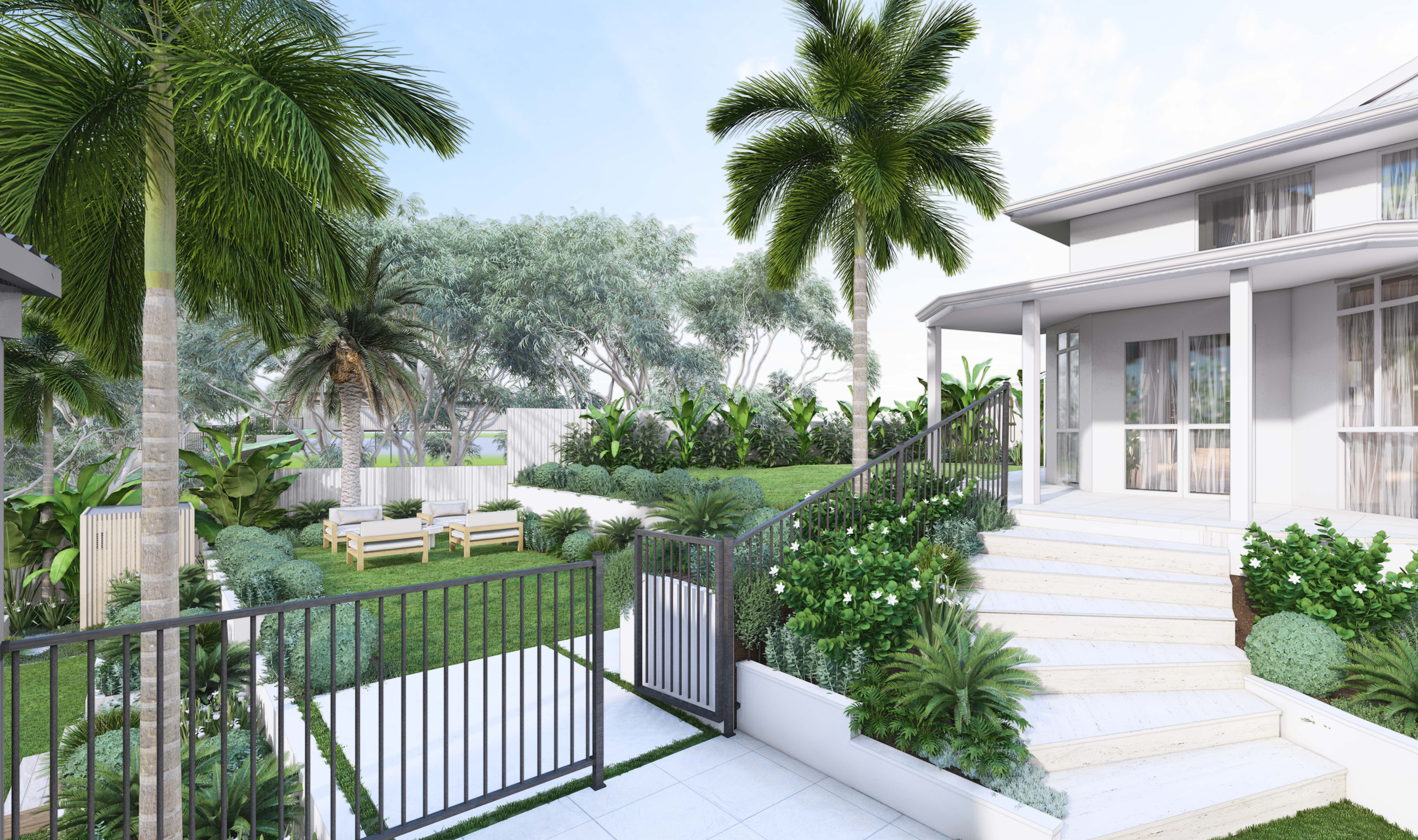
Emma Doman design for Buderim homeowners. Constructed by Shepherd.
Why outdoor work fails - and what separates the projects that last
Most outdoor project failures trace to the same three things: drainage handled poorly, materials chosen for price rather than climate, and engineering treated as optional. None of these show up in the photos a builder shares of the finished job. All of them show up in year three.
A proper outdoor build starts with the site. The fall of the land, the soil type, where water runs in heavy rain, what the existing structures are doing, what the future structures will be doing. From there, the design and the engineering line up - and the materials get specified for the conditions, not the photo.
Retaining walls - the detail that decides if it lasts
A retaining wall is doing real engineering work. It's holding back tonnes of soil, often soil that gets heavier when it's wet. The wall has to deal with the weight, the water pressure that builds up behind it, and the slow movement of the ground over years. Build it badly and you don't notice for two summers. By the third, you're paying twice to fix it.
The five things we always do, and that homeowners should ask about:
· Drainage layer behind the wall - typically a permeable gravel or material against the wall face, allowing water to drain rather than push.
· Ag pipe at the base of the drainage layer, sloped to a discharge point - taking the water away rather than letting it sit.
· Geotextile fabric between the drainage layer and the natural soil - stops fine particles from clogging the drainage and ag pipe.
· Engineered foundation - concrete footing sized for the wall height and soil-bearing capacity. Not optional. Not eyeballed.
· Backfill material specified properly - graded, compacted in lifts, with consideration for what's going on top (driveway, planting, paving).
A retaining wall built without these things often looks the same on day one. By the time the failure shows, the original builder is gone and the homeowner is on their own.
Decks and patios - designing for the climate that's actually here
The Sunshine Coast climate is unforgiving in specific ways: humidity, salt-laden air close to the coast, occasional very heavy rainfall, intense UV. Materials and details that work fine in Melbourne or Sydney don't always survive here. The deck that lasts twenty years is the one specified for this place.
Some practical material notes for 2026 Sunshine Coast builds:
· Hardwood decking - Australian hardwoods (spotted gum, blackbutt) age beautifully and handle the climate. Specify properly seasoned timber and quality oiling routine.
· Composite decking - has come a long way. Cooler underfoot than older composites; lower maintenance; longer warranties. Useful where families have kids and bare feet are constant.
· Patio roofing - colorbond with proper insulation handles heat; polycarbonate gives diffused light but ages; tiles offer thermal mass but require structural attention.
· Drainage - even "undercover" alfresco areas need a fall and a discharge plan. The rain on the Sunshine Coast doesn't ask permission.
· Footings and posts - protected from ground contact; engineered for wind load (cyclonic considerations on some sites).
Landscape architect plans - what changes when a builder is involved early
More Sunshine Coast homeowners are working with landscape architects than they were ten years ago. The work is better for it - outdoor spaces that consider the whole site, not just the patio. But the handover from landscape architect to builder is where the gap often opens.
What we do differently when we're brought in early:
· Read the plans with construction in mind - what the documentation does well, what needs to be resolved on site, what materials need confirming.
· Site-walk with the architect or designer where possible, especially for projects involving levels, retaining or significant drainage.
· Cost the plans honestly - including the engineering, the council costs, the things that don't show in the renders but show in the invoice.
· Flag any constraints - overlays, neighbour considerations, access - early enough to redesign cheaply.
Sitting on landscape architect plans and looking for the builder to bring them to life? That's exactly the kind of project we like.
Council and approvals for outdoor work
Most outdoor projects on the Sunshine Coast need council involvement at some level. The bigger and more structural the work, the more involved the approval. Some quick guidance:
· Retaining walls over 1m in height typically require Building Approval, with engineering. Over 1m near a property boundary may also need Development Approval.
· Decks over 0.3m off the natural ground require Building Approval. Lower decks may be exempt in specific circumstances - check the rules for your block.
· Roofed structures (patios, alfresco, outdoor rooms) almost always require approval. Habitable rooms require more.
· Setbacks and site coverage apply to most outdoor structures. Check before you design, not after.
· Heritage overlays, flood overlays and coastal management overlays change the rules. Common in pockets across the Coast.
A capable builder handles council. It's the work most homeowners least want to do themselves, and the work that, done well, saves weeks at the build stage.
The five questions worth asking before you commit to a builder
· What's your approach to drainage on this kind of project?
· Will you handle the council approvals, or is that on me?
· Who's the engineer you'd use for this project, and have you worked with them before?
· What's the warranty on the structural work, and what does it actually cover?
Most outdoor projects don't fail because the homeowner chose the wrong design. They fail because the homeowner chose a builder who couldn't answer those questions. A few minutes of conversation upfront sorts most of it out.
A practical next step
If you're considering an outdoor project on the Sunshine Coast - a retaining wall, a deck, a patio, an alfresco area, or a full landscape build - the cheapest and fastest way to know what's possible on your block is a site visit. We do these for free across the Sunshine Coast.
We walk the site, look at the levels, the soil, the drainage and the existing structures. We listen to what you're trying to do. Then we either tell you what the project will realistically cost and how long it'll take, or we tell you what needs to shift to make it work. Either way, you walk away with a clearer picture and no obligation.
Considering an outdoor project on the Sunshine Coast? Book a free on-site visit and we'll walk through what's possible, what it's likely to cost, and how to set the project up for the long haul. Click the Contact Us link below to get started.
A short note on this guide
Conditions vary site by site. Everything above reflects standard 2026 practice across Sunshine Coast builds. For your particular block, always confirm with a current site assessment or directly with council before making decisions.
