
Sunshine Coast Granny Flat Rules - A Plain-English Guide for 2026
If you've been looking into building a granny flat on the Sunshine Coast, you've probably hit the same wall most homeowners hit: every website tells you something slightly different. Some are out of date. Some are written for New South Wales. And some skip over the part that actually matters - what you can build on your particular block.
This guide cuts through it. Below is what the rules look like on the Sunshine Coast in 2026, what changed in recent years, and the questions worth answering before you commit to a design.
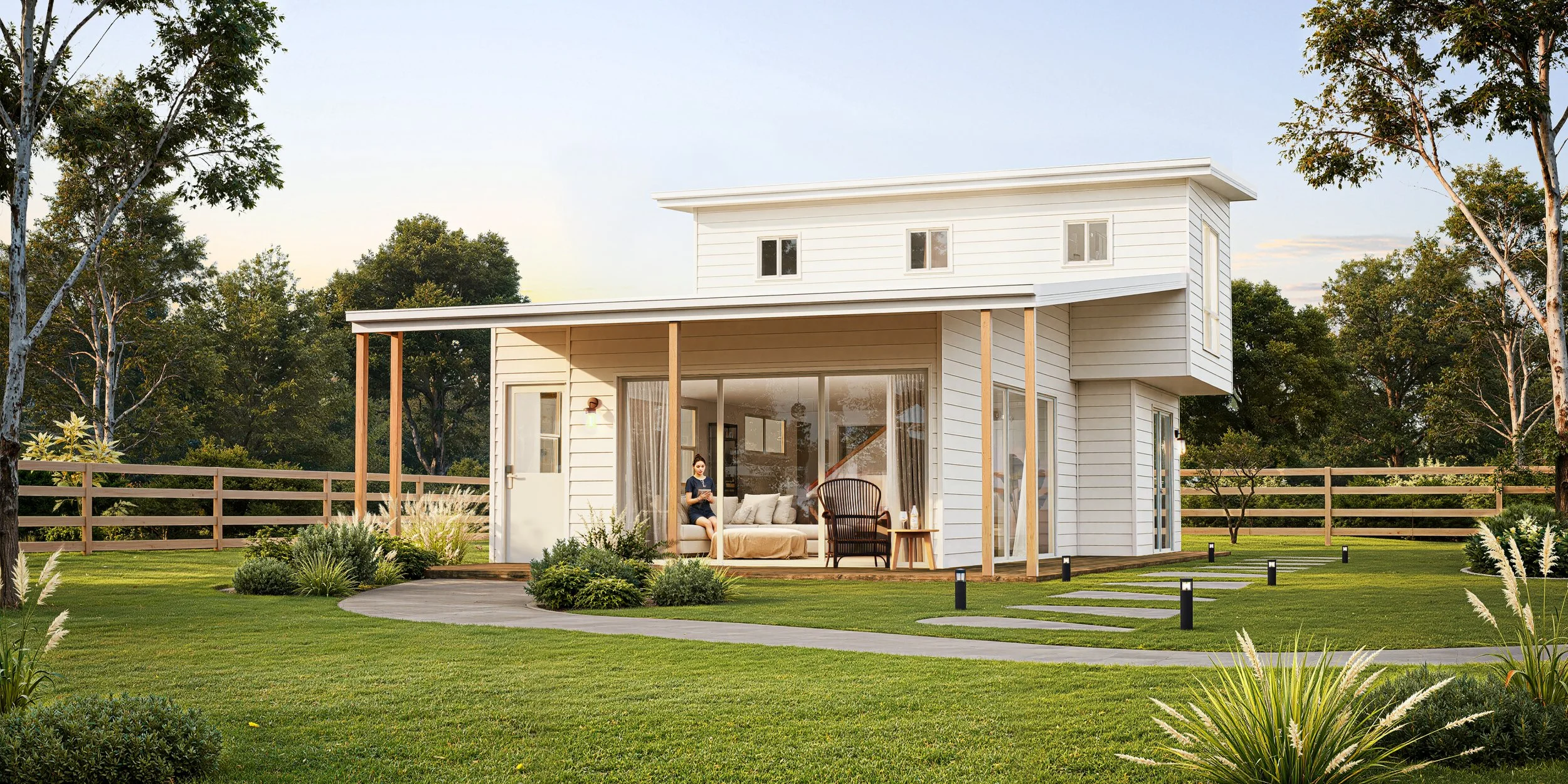
The Davenport - Double storey granny flat design by Shepherd Construction Group
First, the language
On the Sunshine Coast, what most people call a "granny flat" is officially a secondary dwelling - a separate, smaller living space on the same lot as the main house. The terms are used interchangeably most of the time, and we'll do the same here. The important distinction is between a secondary dwelling and a dual occupancy: a secondary dwelling sits within the same property title and has to be physically close to the main home; a dual occupancy is a different beast with different rules and a different approval path.
What you can build - the size limits
Sunshine Coast Council caps secondary dwellings at 60 square metres of gross floor area in residential zones, and 90 square metres in rural zones. The 60 square metres is generous enough for a well-designed one-bedroom or compact two-bedroom layout. Rural blocks have more room to move.
In some coastal pockets - Moffat Beach, Shelly Beach and Dicky Beach - the cap drops to 45 square metres and the height is restricted to 4 metres. These tighter limits exist to protect the character of those coastal streets, and they catch a lot of owners off guard. If you're in one of those areas, the design conversation starts from a different place.
How close it has to be to the main house
A secondary dwelling must sit within 20 metres of the primary residence. The thinking is straightforward: it's meant to be part of the same property, not a separate compound. Twenty metres is plenty for most blocks - far enough for privacy, close enough to share services.
On larger rural blocks, the 20-metre rule can feel restrictive. There are workarounds in some cases, and there are reasons it sometimes makes more sense to look at dual occupancy instead. A site visit from a builder who knows the local rules will sort this out quickly.
Council approval - what's actually required
Almost every granny flat on the Sunshine Coast needs council approval. The exact pathway depends on your zone and the specifics of your block, but the typical sequence is:
· Initial site assessment - confirm the block, the zoning, and any overlays (flood, bushfire, character, heritage).
· Design that fits the rules - size, setbacks, height, site coverage.
· Development Approval (DA) lodged with Sunshine Coast Council - this is the planning approval.
· Building Approval - the construction-side certification, lodged with a private certifier most of the time.
· Plumbing approval where required.
Approval timelines move around. A straightforward block with a code-compliant design can be approved in 6–10 weeks. More complex blocks - heritage overlays, flood-prone areas, awkward setbacks - can take 3–6 months. The biggest variable is how cleanly the application is prepared the first time. Mistakes at lodgement cost weeks.
Can you rent it out?
Yes. Since the Queensland Government removed occupancy restrictions on secondary dwellings in late 2022, you can rent a granny flat on the open market - to a tenant who isn't a family member. That change is a big part of why investor enquiries have lifted across the Sunshine Coast in recent years.
Whether renting it out is the right call commercially is a separate question. Yields on well-designed secondary dwellings in good Sunshine Coast pockets are healthy in 2026, but the build cost, holding costs and ongoing management need to be modelled properly before signing anything. A builder shouldn't be the only voice in that conversation - talk to your accountant too.
Setbacks, site coverage and the bits people forget
Beyond size, council looks at a few other things that quietly shape what's possible:
· Setbacks - minimum distances from your boundaries. Side, rear and front setbacks all matter.
· Site coverage - the total area of your block covered by buildings. Granny flats count toward this.
· Private open space - the secondary dwelling needs its own usable outdoor area.
· Parking - typically one parking space for a secondary dwelling, on top of the main house's existing requirements.
· Privacy and overlooking - window placement and screening matter, especially on tighter blocks.
None of these are deal-breakers on most blocks. They do, however, shape design. A capable builder will walk the site, eyeball all of these against the design intent, and tell you upfront if the plan needs to change.
What changed for 2026
Nothing dramatic at the state level for 2026 - the big change was 2022's removal of occupancy restrictions. What's shifted more recently is the way Sunshine Coast Council is processing applications: cleaner digital lodgement, slightly faster turnarounds on straightforward applications, and more emphasis on character compliance in coastal zones.
The other meaningful shift is the design side. Two-storey granny flats (such as The Davenport) are increasingly common on tighter blocks - you keep the footprint small, gain the floor area upstairs, and end up with a more liveable space. Worth considering if your block is constrained or if you want the secondary dwelling to feel like a proper home rather than an annexe.
Questions to answer before you commit to a design
If you're at the stage of getting serious about a granny flat, these are the five questions worth answering early. They save weeks of redesign and a chunk of money.
· What zone is the block in, and are there any overlays (flood, bushfire, character)?
· How is the granny flat going to be used - family, investment, future flexibility, or a mix?
· What's the realistic budget, including the design, approvals, build and connections?
· When does it need to be finished? Spring is a popular target, which means design and approval need to start now.
· Who's coordinating the whole thing - you, an architect, or your builder?
A practical next step
If you're on the Sunshine Coast and thinking about a granny flat, the cheapest and fastest way to know what's actually possible on your block is a site visit. We do these for free across the Sunshine Coast - we look at the block, talk through what you're trying to do, and tell you within an hour or so what's realistic. If it's not the right time, we'll tell you that too.
Either way, you walk away with a clearer picture and no obligation to go further.
Considering a granny flat on the Sunshine Coast? Book a free on-site visit with our team. We'll walk your block, run through what council allows, and give you a realistic picture of what the build looks like. Click the Contact Us link below to get started.
A short note on this guide
Rules change. Site-specific circumstances change. Everything above is accurate on the date of publishing and based on Sunshine Coast Council planning provisions and Queensland Government regulations as they currently stand. For your particular block, always confirm with a current site assessment or directly with council before making decisions.
